An RCD tripping can be unnerving, especially when it happens out of the blue. Taking the right steps in the first few minutes can keep your home safe and also make it much easier for an electrician to track down the fault quickly.
Understanding what an RCD trip usually means
An RCD (residual current device) is designed to protect you from electric shock and reduce the risk of electrical fires. If it trips, it has detected a fault or imbalance and has turned the power off on purpose.
The key thing to remember is that a tripping RCD is doing its job. Your aim is not to “beat” it into staying on, but to gather clues, carry out a few safe checks, and then call in professional help if needed.
Essential safety rules before you do anything else
Before you start trying to reset devices or unplug appliances, keep these simple rules in mind. They can prevent a minor issue from becoming dangerous.
Do not repeatedly force the RCD back on if it keeps tripping straight away.
Never tape, wedge or bypass the RCD or any other protective device.
Avoid touching exposed wiring, damaged sockets or accessories.
Stay away from electrics in areas affected by water leaks or flooding.
Switch off any obviously sparking, burning or buzzing equipment at the mains if it is safe to do so.
If anything smells of burning, is hot to the touch, or you can see scorching, treat that as urgent. Turn the affected circuit off, keep clear, and call an electrician straight away.
Quick, safe checks you can do after an RCD trip
Once you have made sure there are no immediate signs of danger, there are a few safe checks you can carry out. These can sometimes get you partial power back and will help your electrician later on.
1. Note which circuits have gone off
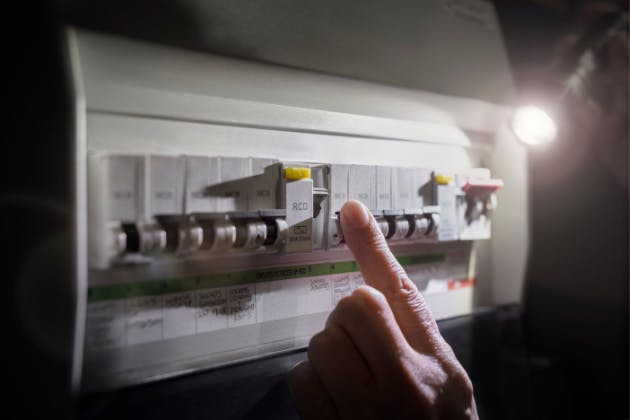
Start at your consumer unit. Without forcing anything, look carefully at which switches are down. Is it just the RCD, or are one or more individual circuit breakers also off?
Take a clear photo of the consumer unit, showing all labels and switch positions. This is very useful for fault finding, especially if you need to talk to an electrician over the phone.
2. Unplug rather than just switching off
Go around the affected area and unplug appliances at the socket, do not just switch them off. Focus on items that heat or move first, as these are more likely to develop faults.
This includes kettles, toasters, portable heaters, washing machines, tumble dryers, dishwashers and electric showers. Once unplugged, you can try resetting the RCD once. If it holds, try plugging items back in one at a time until it trips again.
3. Check outdoors, garages and gardens
Outdoor and outbuilding electrics are common triggers for RCD trips, especially in wet or cold weather. Check items like garden lighting, pond pumps, outdoor sockets, hot tubs and electric gates.
If it is raining or surfaces are wet, do not touch metalwork or outdoor sockets. Instead, note what is connected and any visible damage or moisture, and share this with your electrician.
4. Think about recent changes or DIY work
Has anything electrical changed recently? Even small jobs can disturb wiring and cause an intermittent fault. This might be as simple as a new light fitting, a TV bracket, a kitchen refit or nails and screws in walls.
Make a short list of any DIY, decorating, drilling or building work that has taken place in the last few days or weeks, particularly in the rooms that have lost power.
What not to do with a tripping RCD
It is tempting to repeatedly reset a tripping RCD until it stays on, especially if you are in the middle of cooking or working. This is risky, as you could be forcing power through a fault.
Do not swap breakers around, remove covers from the consumer unit, or try to “bridge” the RCD. These actions are unsafe and can invalidate insurance or cause serious injury.
If the RCD will not reset even after unplugging appliances, or it trips instantly, stop there and arrange professional fault finding. You have already done what is safe and reasonable as a homeowner.
Information to collect before you call an electrician
A little preparation can significantly speed up fault finding and reduce the time an electrician needs on site. Think of it as building a simple case file for your electrical issue.
Time and pattern: Note the time of day it tripped and whether it has happened before.
Weather conditions: Was it raining, very damp, or particularly cold or hot at the time?
What was in use: List which appliances, sockets or circuits were being used when it tripped.
Areas affected: Write down which rooms lost power and which still work.
Photos: Take photos of the consumer unit, any damaged accessories and anything unusual you have spotted.
Having this information ready when you speak to an electrician, or when you book fault finding, helps them arrive with the right expectations, tools and test equipment.
When an RCD trip should be treated as urgent
Some situations warrant a more urgent response. If the RCD will not reset and you have no power to essential circuits such as the fridge, heating or medical equipment, you should call for help promptly.
Also treat it as urgent if there are signs of burning, buzzing from the consumer unit, water leaks near electrical equipment, or repeated tripping every time you use a particular circuit. In these cases you should not keep trying to reset the RCD.
If your consumer unit is very old or lacks modern RCD protection, it may also be a good time to ask about consumer unit upgrades while the electrician is on site.
How Beales Electrical approaches RCD fault finding
At Beales Electrical, fault finding is carried out methodically and with safety as the priority. The first step is to isolate and identify the affected circuits so we can work safely without disrupting more of your home than necessary.
Where appropriate, we use insulation resistance testing and other specialised tests to locate faults in cables and accessories. We then inspect sockets, switches and connected equipment in the suspect areas to confirm the cause.
Throughout the visit we keep you informed in plain language, not jargon. At the end you receive clear written findings, along with any recommendations for repair, ongoing monitoring or upgrades, such as improved RCD protection or a modern consumer unit.
Next steps if your RCD has just tripped
If you have worked through the safe checks above and your RCD is still tripping, it is time to get a qualified electrician involved. You have already done the most helpful thing by gathering information and not forcing anything.
Beales Electrical offers a dedicated Fault Finding service to track down RCD issues efficiently and safely. To arrange a visit, you can book fault finding online, request a callback through our website, or call Beales Electrical directly on 02081331234.
The sooner a persistent RCD trip is investigated, the sooner your home can be both fully powered and properly protected again.