Use this step‑by‑step checklist to get your home ready for a safe, compliant EV charger installation.
Blog
EV Charger Installation Checklist: What to Check Before Installation
Beales Electrical
Installing a home EV charger is more than just fixing a unit to the wall. There are several safety and compliance checks that should be completed before any work begins, and understanding them will help your installation go smoothly.
Check you can have a dedicated circuit
A home EV charger should always run on its own dedicated circuit from your consumer unit. This allows the charger to be correctly protected and reduces the risk of overloads on existing circuits.
Your electrician will confirm whether there is space to add a new circuit and what cable size is appropriate for the charger rating and cable run. If your current wiring is very old or non-compliant, you may need remedial work before a charger can be installed.
Confirm consumer unit capacity and protection
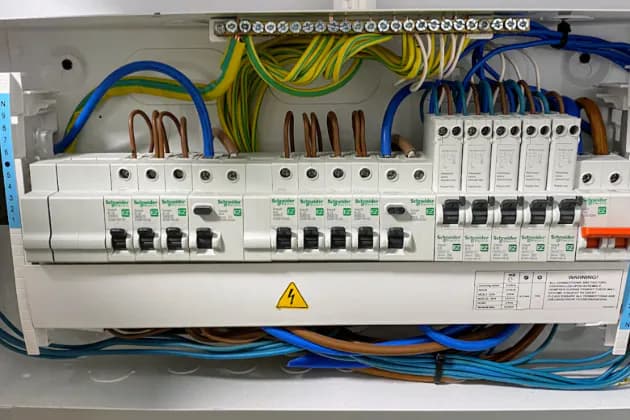
Your consumer unit (fuse box) is at the heart of a safe EV charger installation. Before installation, your electrician should inspect it to check it is modern, in good condition and has room for an extra circuit.
They will look for spare ways for a new breaker, the overall main switch rating, and whether everything meets current wiring regulations. In some cases, a consumer unit upgrade may be recommended to provide the correct protection and space for future circuits.
Spare way available for a new EV circuit breaker
Main switch and busbar suitable for extra load
Labels, covers and enclosure in good condition
It is also important to confirm what type of protective device will be used on the EV circuit. Many installations now use an RCBO, which combines overcurrent and RCD protection for the individual circuit, giving clear disconnection in the event of a fault.
RCDs, DC protection and EV charger safety
EV chargers require additional earth leakage protection. This is typically provided by an RCD, or more commonly by an RCBO fitted at the consumer unit. Your installer will choose a type that suits both the charger and the rest of your installation.
Some EV chargers have built-in DC protection. Others rely on a specific type of RCD or an additional device to handle DC fault currents. You do not need to know the technical details, but you should confirm your installer has allowed for suitable DC protection in line with the charger manufacturer’s instructions and the wiring regulations.
Earthing arrangement and supply checks
Before installation, your earthing arrangement must be checked. The electrician will identify whether your property is TN-S, TN-C-S or TT and assess whether additional measures are needed for an outdoor EV point.
Some earthing types and supply conditions require extra protective devices or specific mounting arrangements to keep the charger safe in the event of a fault. Your installer should test the earth fault loop impedance and bonding to main services as part of their survey.
Cable routing and charger location
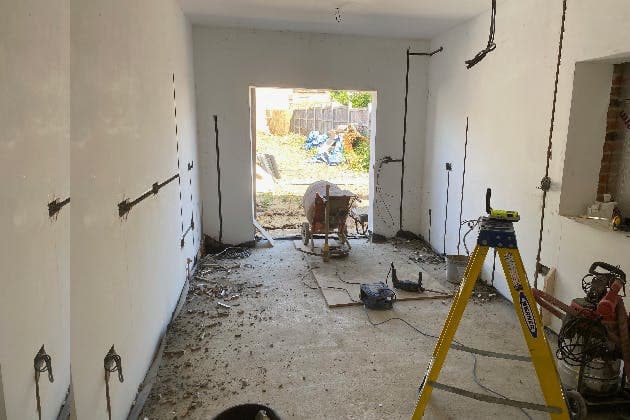
Part of the pre-install survey is agreeing the cable route from the consumer unit to the charger position. This affects both the price and how neat the installation will look.
Cables may be run through loft spaces, under floors, along external walls in conduit or trunking, or in underground ducting where necessary. Your installer should explain the trade-off between shortest route and aesthetics, while keeping within safe installation methods.
External mounting and weatherproofing checks
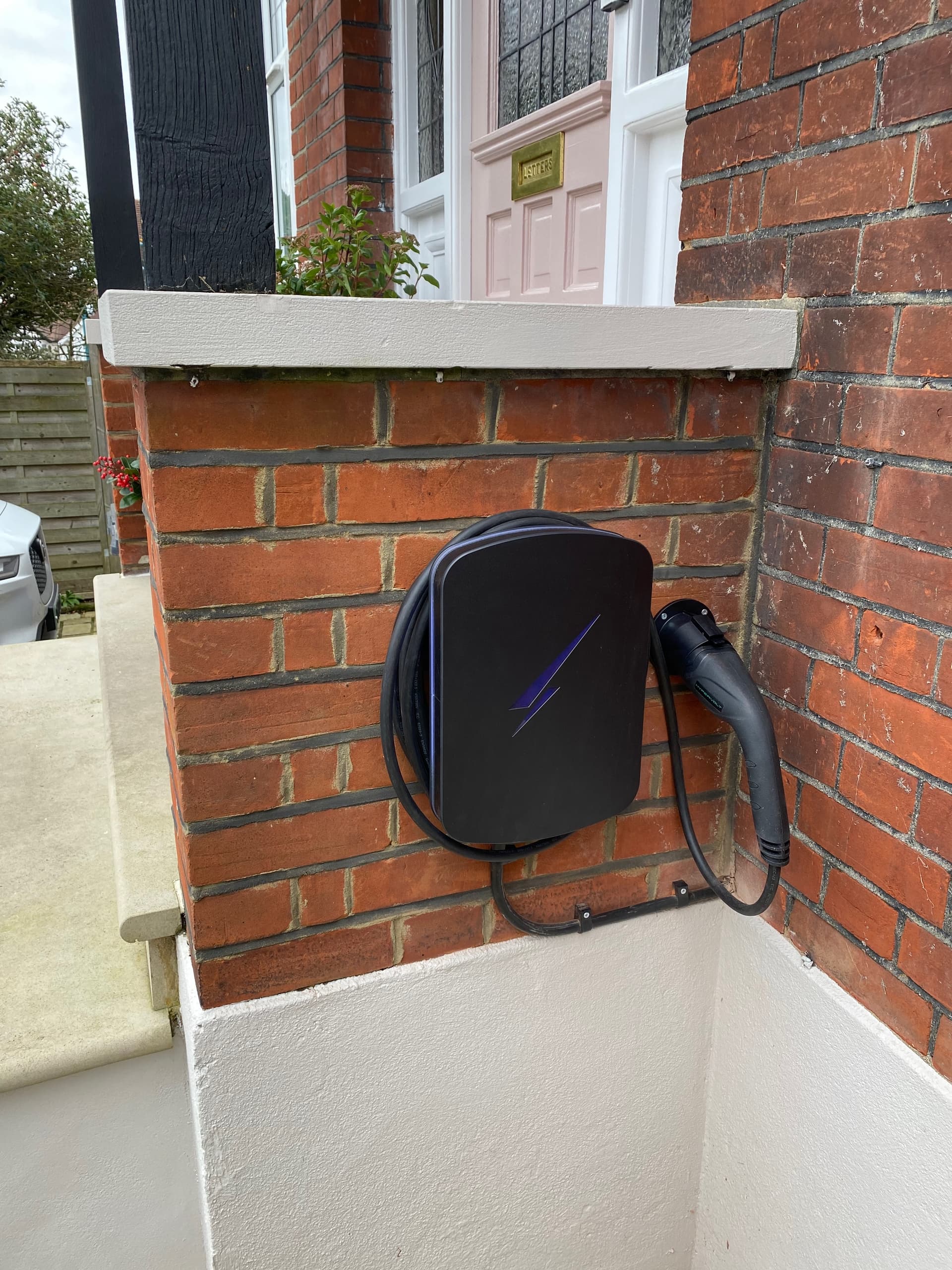
Most home EV chargers are fitted outdoors, so the chosen location needs to be practical and protected. Your installer should check that the proposed position is within the charger’s weatherproof rating and away from excessive heat, direct spray from hoses, or likely impact from vehicles.
They will also look at the surface you plan to mount on, such as brick, block, render or timber, and confirm suitable fixings and any sealing needed to keep water out of the wall and cable entries.
Load management and your overall usage
EV chargers place a significant extra load on your electrical supply, especially if you also have electric showers, hot tubs, or electric heating. A thorough survey will include a basic load assessment to check that your main supply can reasonably support an EV charger.
Depending on the findings, your installer may suggest load management options. These can include chargers that automatically reduce power when your home usage is high, or limit charging to off-peak times. This can help prevent nuisance tripping and keep your supply within safe limits.
Preparing for DNO notification
In most cases, fitting a home EV charger involves a required notification to your Distribution Network Operator (DNO). This is so the local network operator can confirm your supply is suitable and record the additional load on their system.
Your installer will usually handle this process, either as a pre-approval or a post-install notification depending on the charger size and your existing supply. You may be asked for details such as your MPAN (found on your electricity bill) and current supplier to complete the notification.
What to prepare before your survey
A little preparation before your survey helps your electrician give accurate advice and avoid delays. Having the right information to hand also makes remote or photo-based quotes more reliable.
Clear photos of your electricity meter and consumer unit, including any labels
Make and model of your EV, plus any charger brand or features you prefer
Typical parking position for the car and where you would like the charger mounted
Confirmation of Wi‑Fi signal strength at the proposed charger location
It is also useful to mention any future plans, such as adding solar panels or a second EV, as this can influence charger choice and consumer unit arrangements.
Book your EV charger survey
Taking time to run through this checklist means fewer surprises on installation day and a safer, more reliable charging setup for years to come. A proper survey should cover your consumer unit, earthing, cable routes, charger location and DNO notification, so everything is compliant as well as convenient.
If you are ready to move forward, book a survey or quote request with
Beales Electrical. Visit our EV chargers service page to learn more about installation options, and see our consumer unit upgrades information if your fuse box needs attention first. Or, if you prefer to talk it through, call us on 02081331234 to arrange your EV charger assessment.
Other Articles