Use registration, certification and clear communication to find an electrician who will complete your work safely and legally.
Blog
Choosing a Qualified Electrician and Understanding Part P
Beales Electrical
Choosing an electrician is about more than finding someone who can complete the job. You need confidence that the work will be tested properly, meet current safety requirements and leave you with the right paperwork. Understanding NAPIT registration and Part P can help you make a well-informed decision before work begins.
What NAPIT registration means
NAPIT is a government-approved competent person scheme for installers working across several building services, including domestic electrical installations. An electrician registered with NAPIT has demonstrated suitable competence, insurance arrangements and systems for carrying out work in line with relevant regulations.
For homeowners, this can make the process simpler. A registered electrician may be able to self-certify certain notifiable domestic electrical work instead of requiring you to arrange a separate inspection through Building Control. However, registration does not mean every possible job is automatically covered, so ask what the electrician is registered to self-certify and what certificates will be supplied.
It is also sensible to check the registration directly through the scheme provider rather than relying only on a logo or claim on a website. A reputable electrician should be comfortable providing their registration details and explaining how they apply to your proposed work.
Part P explained in straightforward terms
Part P is part of the Building Regulations in England and Wales. It covers electrical safety in dwellings and aims to ensure domestic electrical installations are designed, installed, inspected and tested to protect people from fire and electric shock.
Part P is not a trade association, an electrician’s qualification or a certificate itself. It sets legal requirements for safety, while the wiring regulations and inspection and testing procedures provide the technical framework used by electricians. Some work is notifiable under Building Regulations, particularly certain new circuits, consumer unit changes and electrical work in special locations such as bathrooms.
A registered competent person can usually notify eligible work on your behalf. If the electrician is not registered for the relevant scheme, you may need to involve your local authority Building Control department before work starts. Ask this question at the quotation stage, because failing to notify work when required can create problems when selling or remortgaging your home.
Paperwork you should receive
The certificate depends on the type and extent of work. For a new circuit or a larger installation, you would normally expect an Electrical Installation Certificate, often called an EIC. This confirms that the work has been inspected and tested and records key details about the installation.
For smaller additions or alterations that do not involve a new circuit, an Electrical Installation Minor Works Certificate may be appropriate. The electrician should explain which document applies rather than simply promising a generic certificate.
Where Building Regulations notification is required and the electrician is registered to self-certify, you should also receive a Building Regulations compliance notification or certificate from the relevant scheme process. Keep these documents with your home records, along with any schedules, test results and updated labels supplied for the consumer unit.
Questions to ask before accepting a quote
A clear quotation should describe what will be done, where the work will take place and what is excluded. It should also identify any assumptions, such as whether floorboards can be lifted, whether access equipment is needed or whether making good and decoration are outside the electrical work.
Before an electrician visits, prepare useful information so they can understand the job accurately. This is particularly helpful for homeowners in areas such as Woodford, where property layouts and access arrangements can vary considerably.
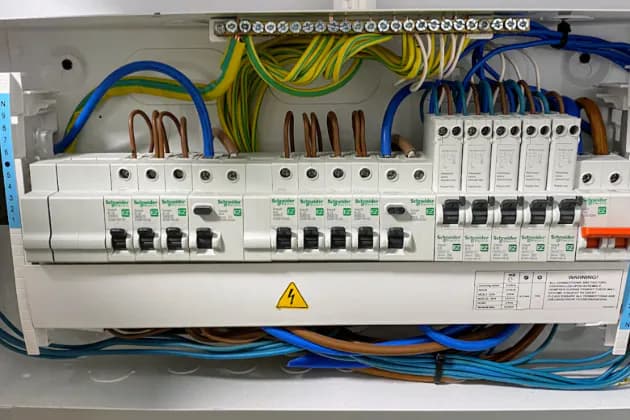
Share clear photos of the consumer unit, sockets, switches and affected areas.
Explain the outcome you want, such as additional sockets, improved lighting or an upgraded supply.
Describe access arrangements, parking restrictions and any areas that will be difficult to reach.
Mention known issues, including tripping circuits, flickering lights, burning smells or previous electrical work.
Do not be concerned if a responsible electrician asks detailed questions or recommends an initial inspection. Good planning helps identify concealed problems and reduces the risk of vague changes being made once work is under way.
Red flags that should concern you
Be cautious if someone refuses to test the installation, says paperwork is unnecessary or cannot explain which certificate you will receive. A professional electrician should inspect and test relevant work, discuss any limitations and provide results in a form you can keep.
Vague scopes of work are another warning sign. If a quote simply says “electrics” without identifying circuits, fittings, testing or remedial work, ask for clarification before agreeing. You should also take care if someone applies pressure for immediate payment, insists on cash only or avoids providing business details and written confirmation.
These signs do not prove that work will be unsafe, but they make it harder to hold an installer accountable. Trustworthy tradespeople will explain the process, communicate clearly and give you time to make a considered decision.
Choose a compliant electrician with confidence
Registration, clear documentation and proper testing give you practical protection when arranging domestic electrical work. Ask about NAPIT registration, Part P notification, the certificate that applies and the testing included before work begins.
For compliant installation and certification, contact Beales Electrical on 02081331234. You can also read customer reviews and view the full range of electrical services before making contact.
Other Articles