Understand how a good electrician decides between a targeted partial rewire and a full rewire, so you can plan your project with confidence.
Blog
Partial Rewire vs Full Rewire: Which Do You Need?
Beales Electrical
Being told you might need rewiring can feel daunting, especially if you are worried about disruption. Understanding the difference between a partial rewire and a full rewire helps you ask the right questions and feel confident in your electrician's recommendations.
How electricians assess your existing wiring
A competent electrician will never guess whether you need a partial or full rewire. They start with a visual inspection, followed by electrical testing where appropriate, to build a clear picture of your installation.
Several key factors guide their decision:
Age of the installation: Older wiring is more likely to be degraded or non-compliant with current safety standards.
Type and condition of cables: Rubber, fabric or early PVC often point towards full rewiring, while modern PVC twin and earth in good condition may suit partial work.
Test results: Insulation resistance, earth continuity and RCD performance show how safe and reliable the wiring really is.
Accessories and fittings: Cracked sockets, burnt switch plates and loose fittings are clues to deeper issues.
Signs of overheating: Discolouration, scorch marks or a warm consumer unit can indicate overloaded or damaged circuits.
After gathering this evidence, the electrician can explain whether targeted upgrades are enough, or if the safest option is to start again with a full rewire.
Situations where a partial rewire is usually suitable
Partial rewires focus on specific circuits or areas, keeping disruption and work to a minimum while still improving safety and usability. They are often the right choice when most of the existing wiring is modern and sound.
Kitchen refurbishments and extensions
Kitchens place heavy demands on your electrics, with ovens, hobs, dishwashers and multiple small appliances. If the rest of the house wiring is in good condition, an electrician may suggest rewiring just the kitchen and any new extension area.
This might include new circuits for cooking appliances, upgraded socket circuits and additional lighting points to match the new layout.
New consumer unit with sound existing cabling
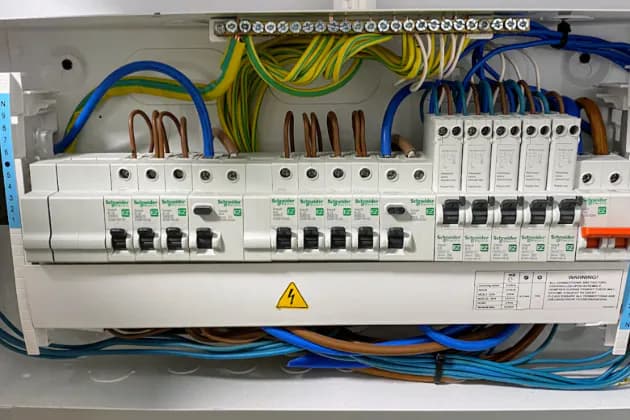
If your cables are modern PVC twin and earth, correctly earthed and testing well, upgrading the consumer unit can significantly improve safety without full rewiring. This allows the addition of RCD and potentially arc fault protection, plus clearer labelling and better fault isolation.
During this work, the electrician will test each circuit. Any that fail testing may be rewired individually, while healthy circuits can remain in service.
Adding high-load circuits such as EV chargers
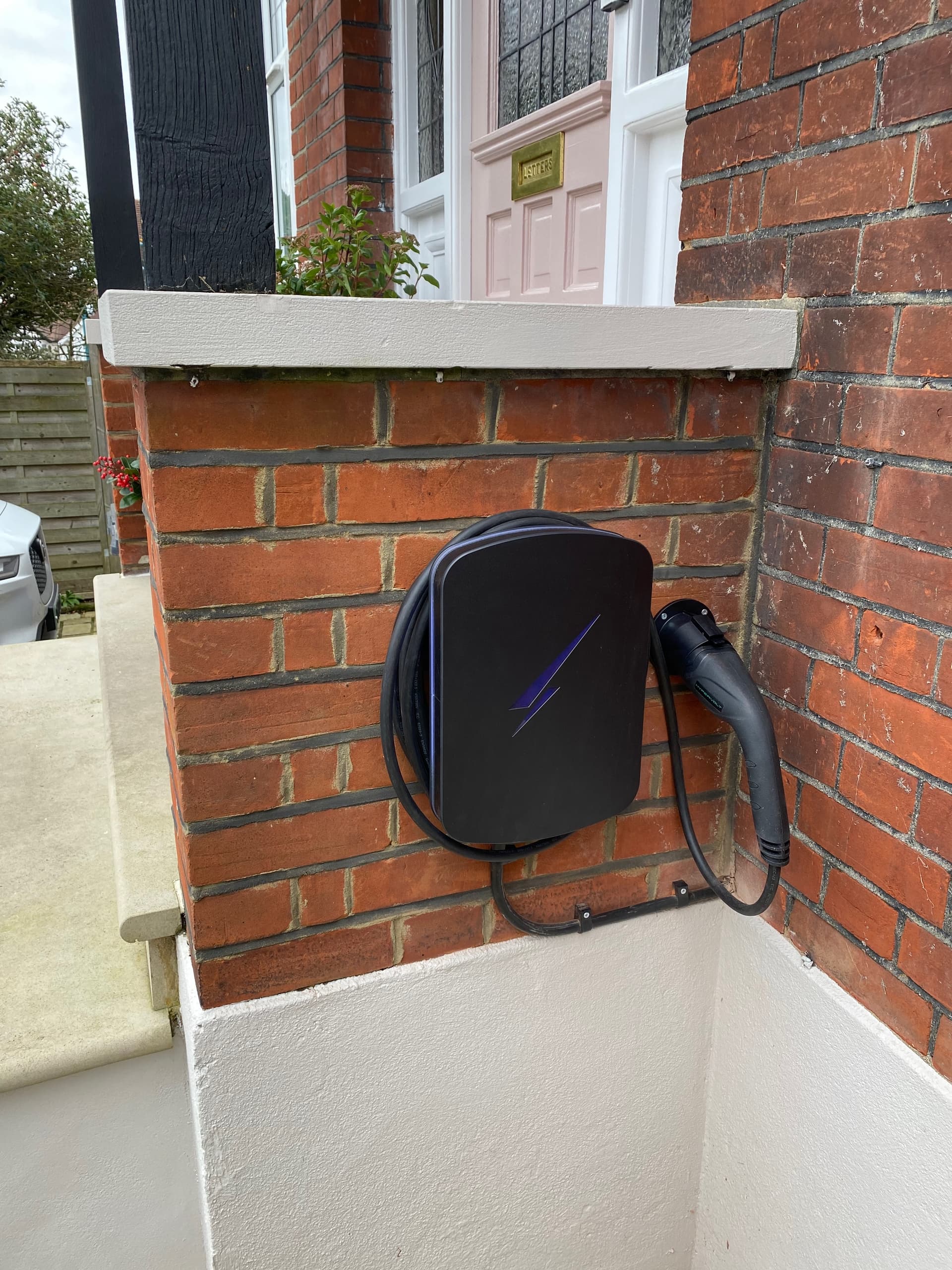
Electric vehicle chargers, heat pumps and electric showers often require their own dedicated circuits. If your existing installation is otherwise sound and has spare capacity, a partial rewire can focus on adding these new circuits safely.
The electrician will check the main supply, earthing and bonding arrangements, then design new cabling routes that minimise disruption while meeting current regulations.
Situations that point towards a full rewire
Sometimes, patching up an old or heavily altered installation is false economy. In these cases, a full rewire is usually safer and more reliable in the long term.
Old or deteriorating cable types
Rubber-insulated wiring, fabric-sheathed cables and very early PVC can become brittle, cracked or poorly insulated over time. If these are present in multiple areas, a full rewire is often the only sensible option.
Even if the lights still work, degraded insulation can create a serious shock or fire risk that will not be fixed by swapping a consumer unit alone.
Repeated faults across several circuits
Frequent tripping, flickering lights and intermittent power can indicate widespread problems. If testing shows poor insulation resistance or unstable readings on multiple circuits, the underlying wiring is likely compromised.
In these cases, replacing all circuits with new cabling designed to current standards gives a safer, more reliable installation and reduces future callouts.
Lack of earthing, bonding and extensive DIY alterations
Proper earthing and bonding are essential for safety. If an electrician finds no earth on lighting circuits, missing bonding to gas and water pipes, or a mix of untested DIY additions, it can be difficult to trust any part of the system.
When circuits have been extended repeatedly, junction boxes are hidden in walls, or colours and wiring methods are inconsistent, tracing faults becomes risky and time consuming. A full rewire provides a clean, documented starting point.
What electricians look for during testing and inspection
An Electrical Installation Condition Report (EICR) or pre-works survey helps your electrician decide between partial and full rewire. This involves both visual checks and electrical tests.
They will note the date on any existing certificates, look at cable markings where visible, and inspect accessible areas such as lofts and under-stair voids. Sockets and switches may be removed to examine terminations and signs of overheating.
Test instruments are then used to measure insulation resistance, earth fault loop impedance and RCD trip times. The results are compared against current standards to judge overall safety.
Disruption: what to expect with rewiring work
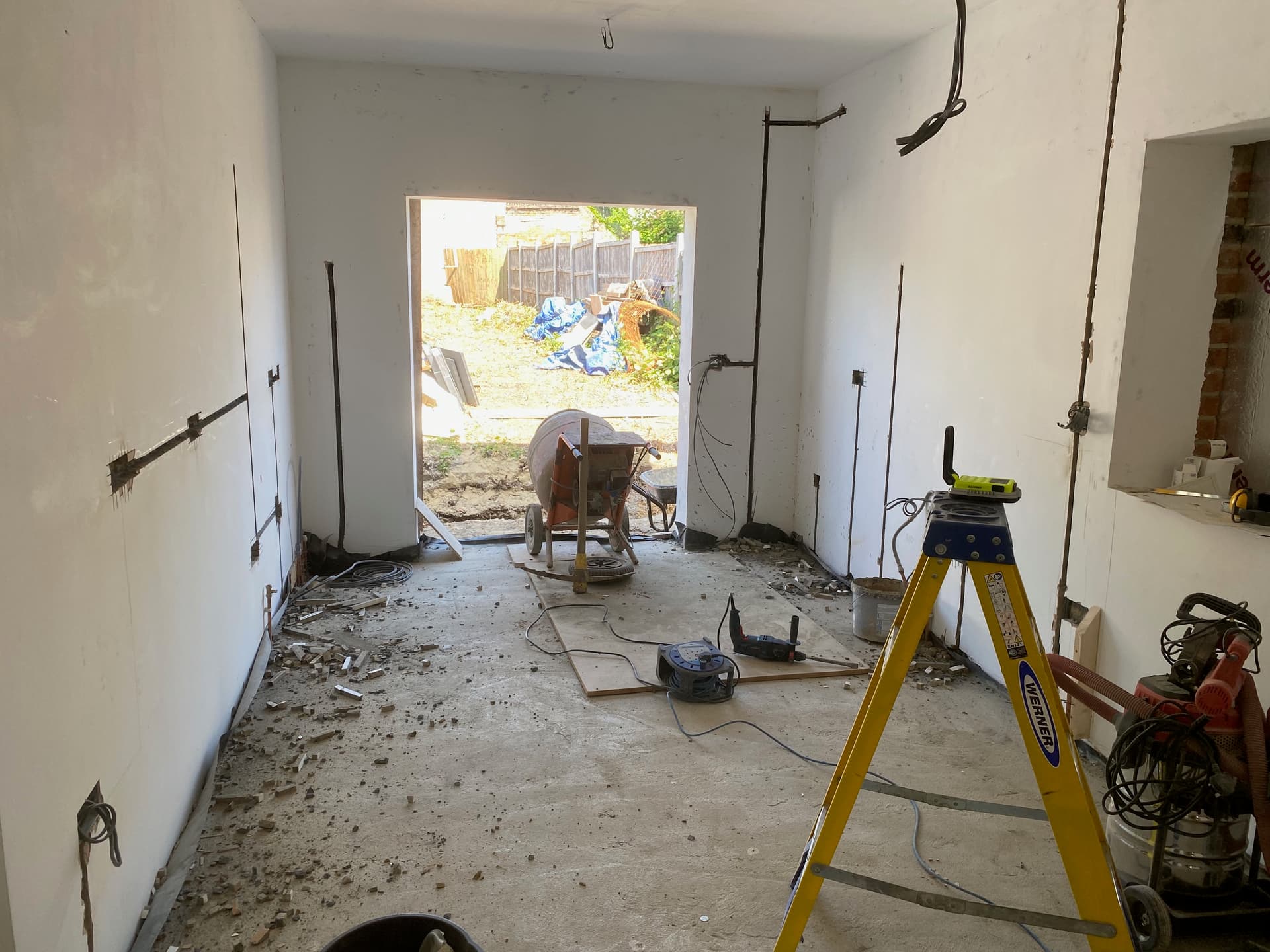
Rewiring is invasive because cables usually run behind plaster and under floors. Expect some lifting of floorboards, chasing of walls and temporary removal of skirting or architrave, especially with a full rewire.
Good electricians will discuss how much making good is included, such as basic plaster patching around chases. Full redecoration is usually separate, so it is wise to plan decorating after the electrical work is complete.
Noise, dust and limited access to certain rooms are normal during the messier stages. Clear communication and a realistic schedule help minimise stress.
Ways to reduce disruption during a rewire
Thoughtful planning can make both partial and full rewires more manageable for your household. Talking through the sequence of work before starting is key.
Room-by-room approach: Agree an order so you can clear furniture in stages and keep some areas usable.
Temporary power arrangements: Extension leads and temporary sockets can maintain key appliances like fridges and routers while circuits are off.
Protecting furnishings: Move valuables, use dust sheets and seal doors where possible to limit dust transfer.
Coordinate with other trades: Align rewiring with plastering, kitchen fitting or decorating to avoid repeated disruption.
For partial rewires, disruption is usually contained to the affected areas, but it is still worth planning around school runs, working from home and pets.
Next steps: get tailored advice for your home
The decision between a partial rewire and a full rewire should always be based on evidence, not guesswork or pressure. A proper site survey and testing will give you a clear picture of your wiring and the options available.
To understand what your home needs, book a site survey with Beales Electrical on 02081331234. Your electrician can talk you through the findings, explain whether partial work is appropriate or if a full rewire is the safer choice, and help you plan the work around your day-to-day life.
For more detail on what to think about before starting, visit our rewires service page.
Other Articles